X-Caliber Multifamily New Construction Finance Primer

Knowledge Is Power – Learn About Options

Multifamily investors considering new construction projects have a host of options when looking for financing solutions. In this whitepaper, we will explore the highlights of two popular financing choices for multifamily new construction; the Federal Housing Administration’s FHA 221(d)(4) program and conventional bank lending.

FHA 221(d)(4) Program for New Construction and Substantial Rehabilitation

FHA 221(d)(4) is a loan insurance program offered by the Department of Housing and Urban Development (HUD) that provides non-recourse financing for the construction or substantial rehabilitation of multifamily properties.
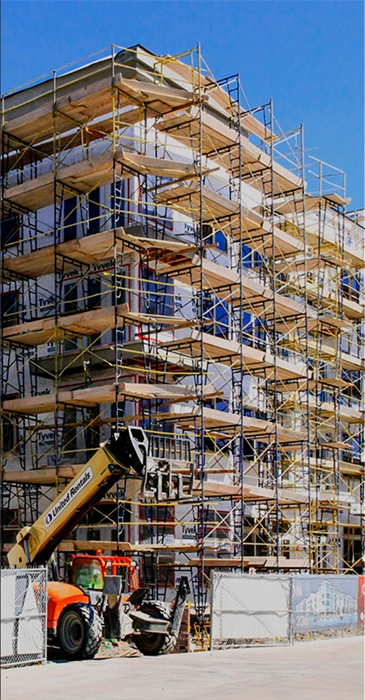
FHA 221(d)(4) Program for New Construction and Substantial Rehabilitation

Program highlights:

  • The program offers high proceeds; although there is no minimum and maximum, the asset financed must be five or more units.
  • It offers long loan terms – up to 40 years – and fixed interest rates, which can provide greater stability in cash flow projections for developers.
  • The program allows for higher loan-to-cost (LTC) ratios – up to 85% for market rate projects, up to 90% for affordable projects, including construction, and soft costs. This means that developers can borrow a larger percentage of the total project cost, which can be used for new construction projects that require large upfront investments.
  • Adherence to Davis-Bacon prevailing wage is standard for the FHA 221(d)(4) loan program.
  • The program provides a streamlined loan application process and standardized underwriting guidelines.
  • It provides nonrecourse financing, which means the borrower is not personally liable for the loan.
  • Loans are fully assumable, which means the loan can be transferred to a new owner, along with the property.
  • The FHA 221(d)(4) program requires borrowers to pay mortgage insurance premiums throughout the life of the loan. (One notable caveat is that the program offers reduced mortgage insurance premiums – currently 25 basis points – for properties that meet certain energy efficiency criteria.)
  • Once your interest rate is locked, you are allowed to refinance to a lower rate during the loan term.
  • FHA loans typically have longer processing times – the process can begin prior to land being titled or construction draws being completed.

Conventional Bank Lending

Conventional bank lending refers to the process of obtaining a loan from a private lender, such as a bank or credit union.
Conventional Bank Lending

Program highlights:

  • Traditional bank lending usually provides lower proceeds.
  • Conventional loans often feature mini-perm structures with terms up to 5 or 7 years.
  • The program has loan-to-cost (LTC) ratios of 55-65%.
  • The program has higher equity requirements.
  • Traditional bank lending is typically recourse, which requires personal guarantees from developers.
  • Conventional loans typically close in 120-150 days.

Here is a recap of the two products and their basic offerings.

FHAConventional Lender
Higher ProceedsLower Proceeds
Long TermsShorter Terms
Fixed RatesFixed Adjustable Rates
MIP RequiredMay Not Require MIP
Consistent Underwriting ParametersMarket-Driven Underwriting Parameters
Non-RecourseRecourse
Fully AssumableNot Assumable

The FHA 221(d)(4) and conventional lending programs have different features for new multifamily construction. Ultimately, developers must weigh the pros and cons and lender requirements before choosing the financing option that best suits their needs.

New Construction Finance Primer Footer Banner

Please reach out to our lending experts at X-Caliber today for a free consultation.

View PDF
(212) 220-7040